Best Markers for Steel Fabrication, Metal Shops, and Welding
Steel fabrication and welding shops rely on clear, dependable markings to keep materials organized, identify parts, mark cut lines, and support quality control. Whether you're working with structural steel, sheet metal, pipes, or fabricated assemblies, choosing the right industrial marker can make everyday work easier and help reduce marking errors.
But not every marker performs the same way on metal. Surface condition, temperature, visibility, and the need for marks to remain legible throughout fabrication all affect which product is best for the job.
In this guide, we'll explain what to look for in an industrial marker and how to choose the right marking tool for your metal shop.
Why the Right Marker Matters in Metal Fabrication
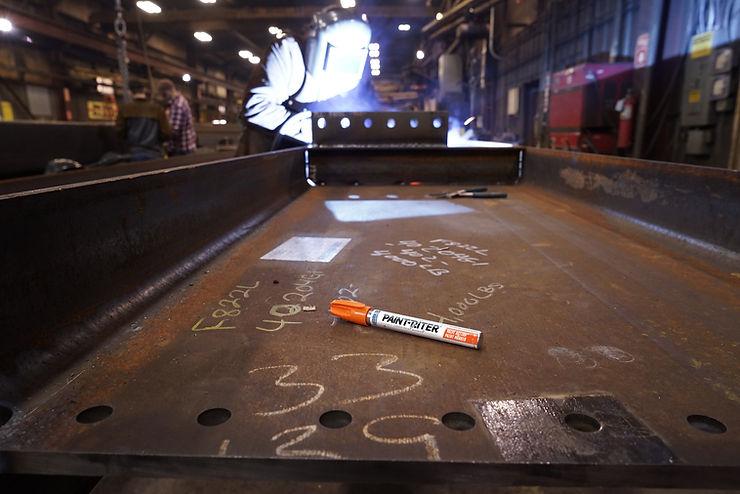
Metal fabrication involves several stages, from receiving raw materials to cutting, forming, welding, inspection, and final assembly. Markings help workers identify materials and communicate important information throughout these processes.
Industrial markers are commonly used for:
-
Marking cut lines and layouts: Identify where material needs to be cut, drilled, or shaped.
-
Part identification: Label components, work orders, and assemblies during production.
-
Material sorting: Distinguish between different parts, sizes, grades, or production batches using a consistent marking system.
-
Welding preparation: Identify component locations and assembly references before welding begins.
-
Quality control: Mark inspection points, rejected parts, or areas requiring additional attention.
-
Inventory management: Keep material identification visible during storage, handling, and shipment.
The right marker depends on the specific task. A marker used to identify raw steel in a storage yard may have different requirements from one used for precise layout work or inspection.
1. Liquid Paint Markers: Best for General Metal Shop Work
Liquid paint markers are a versatile choice for many metal fabrication applications. They dispense opaque paint that can produce highly visible markings on suitable metal surfaces, including dark steel and other materials where ordinary ink may be difficult to see.
Depending on the formulation, liquid paint markers may be suitable for marking parts, identifying materials, writing on metal components, and making layout references.
What to look for
-
High visibility: Choose a color that contrasts with the metal surface.
-
Appropriate tip size: Fine tips work well for detailed markings, while medium and broader tips are useful for larger lettering and more visible lines.
-
Surface compatibility: Consider whether the steel is clean, oily, painted, coated, or rusty.
-
Drying performance: Allow sufficient drying time before handling parts or exposing markings to further processing.
For general-purpose metal marking, the MPD15 xylene-free paint marker is one option to consider. For applications where a xylene-based formulation is preferred, the MPDX industrial paint marker offers another choice.
The best option depends on the surface, working conditions, and performance requirements of your particular application.
2. Solid Paint Markers: Best for Rough Steel and Heavy-Duty Applications
Solid paint markers are useful when working with rough, textured, or weathered materials. Unlike liquid paint markers, which dispense paint through a nib, solid paint markers deposit a solid marking material onto the surface.
They can be particularly useful for marking steel stock, structural components, metal products, and materials handled outdoors or in demanding industrial environments.
When should you choose a solid paint marker?
Consider a solid paint marker when you need to:
-
Mark rough or textured steel.
-
Identify large pieces of stock or structural components.
-
Make visible marks during material handling and sorting.
-
Mark surfaces where a traditional liquid marker may be less convenient.
Solid paint markers are not automatically suitable for every oily, wet, or hot surface. Performance varies by product and surface condition, so test the specific marker before using it for critical production work.
For metal shops that handle a variety of materials, keeping both liquid and solid paint markers available can provide greater flexibility.
3. High-Temperature Markers: For Applications Involving Heat
One of the most important considerations in a welding or fabrication shop is temperature.
A marker that works well on room-temperature steel may not perform properly on hot metal. Heat can affect paint flow, drying, adhesion, and the legibility of a marking. Some formulations may also produce unwanted smoke or fumes when exposed to elevated temperatures.
If you need to mark heated components, billets, pipes, or other materials before or during a high-temperature process, choose a product specifically rated for the actual surface temperature and intended application.
Before purchasing a high-temperature marker, verify:
-
The manufacturer's maximum surface-temperature rating.
-
Whether the product is intended for hot or cold marking.
-
Whether the marking must remain visible after heating.
-
Whether the marking can interfere with welding, coating, heat treatment, or subsequent inspection.
-
The manufacturer's safety instructions for the application.
Important: Do not assume that a marker labeled “industrial” or “permanent” is safe to use on hot metal. Follow the product documentation, and never apply an ordinary paint marker to hot steel unless the manufacturer specifically permits that use.
4. Choosing the Right Tip Size for Fabrication Work
Tip size affects both precision and visibility. Selecting the right tip can make markings easier to read and reduce the time spent identifying components.
Fine-tip markers are useful for smaller components, detailed identification, narrow spaces, and writing where accuracy matters. They are often a good choice when markings must fit within a limited area.
Medium-tip markers provide a balance between precision and visibility. They are useful for general part identification, notes, and routine metal shop marking.
Broad-tip markers are better suited to larger lettering, bold identification marks, and applications where workers need to see markings from a greater distance.
For more detailed marking work, explore our fine-tip paint markers.
When choosing a tip, consider the size of the component, the amount of space available, and whether the marking needs to remain readable after handling.
5. What About Marking Oily or Dirty Steel?
Steel fabrication shops don't always work with perfectly clean surfaces. Materials may arrive with mill scale, oil, grease, moisture, rust, or protective coatings.
These conditions can affect marking performance.
If you need to mark oily steel, choose a marker specifically suited to the surface condition. Do not assume that a paint marker will adhere properly simply because it produces an opaque line.
For the best results:
-
Identify what is on the surface, including oil, grease, rust, or coatings.
-
Check the marker manufacturer's compatibility recommendations.
-
Clean the marking area when required and when it is safe to do so.
-
Test the marker on a representative piece of material.
-
Confirm that the mark remains legible after handling and any planned processing steps.
If surface preparation isn't possible, look for a product designed for the specific conditions rather than relying on a general-purpose marker.
6. Can You Use Paint Markers Before Welding?
Paint markers can be useful for layout, component identification, and assembly references before welding. However, the marking product must be appropriate for the work that follows.
Before marking a weld area, consider whether the marker's paint or other ingredients could affect weld quality, introduce contamination, or create unwanted fumes when heated.
For critical welding applications, follow the welding procedure, applicable material requirements, and the manufacturer's instructions. Keep markings away from the weld zone when required, and remove them using an approved method if the procedure calls for a clean surface.
For stainless steel and other contamination-sensitive materials, additional restrictions may apply. Use a marker that meets the applicable material and process specifications, and obtain supporting documentation when required.
A general-purpose industrial paint marker should not be treated as a welding-qualified marking product unless the manufacturer confirms its suitability for that use.
7. How to Make Industrial Markings Last Longer
Even a high-quality marker can produce disappointing results if it is used on an incompatible surface or exposed to conditions beyond its capabilities.
To improve marking performance:
-
Choose the right formulation. Match the marker to the material and environment.
-
Use a contrasting color. White and yellow can be easier to see on dark steel, while darker colors may stand out on lighter surfaces.
-
Allow adequate drying time. Follow the manufacturer's directions before stacking, handling, or processing marked parts.
-
Store markers correctly. Keep caps secure and follow the storage instructions to help prevent premature drying.
-
Test before production. Check visibility, adhesion, and durability under actual working conditions.
-
Consider downstream processes. Cutting, grinding, welding, heat treatment, coating, and cleaning may remove markings or change their appearance.
If markings are used for traceability, inspection, or another critical production function, verify that the selected marking method meets the facility's requirements.
8. How to Choose the Best Marker for Your Metal Shop
The best marker is the one that matches the job, rather than simply the one with the most durable or permanent marking.
Use these general guidelines when selecting an industrial marker:
| Application | Marker type to consider |
|---|---|
| General part identification on suitable metal surfaces | Liquid paint marker |
| Rough steel and large material identification | Suitable solid paint marker |
| Fine layout lines and detailed writing | Fine-tip paint marker |
| Large lettering and highly visible identification | Medium- or broad-tip marker |
| Marking heated steel | Marker specifically rated for the actual temperature |
| Stainless steel or contamination-sensitive components | Marker meeting the applicable material specifications |
| Temporary assembly references | Marker with suitable removability and surface compatibility |
These are starting points, not universal rules. Always verify the product specifications for your actual material, surface condition, and production process.
Find the Right Industrial Marker for Your Application
The right industrial marker can help steel fabricators, welders, and metal shops improve part identification, material organization, and day-to-day workflow.
Whether you need a liquid paint marker for general-purpose marking, a solid paint marker for rough steel, or a specialized marker for a demanding application, start by considering the surface, temperature, required visibility, and what will happen to the material after it is marked.
Marking Pen Depot offers industrial marking products for a variety of applications. Browse our MPD15 paint markers, MPDX industrial paint markers, and fine-tip paint markers to find options for your shop.
If you're unsure which marker is best for your application, consider the material you're marking, its surface condition, and the temperatures and processes it will encounter. These details can help narrow down the right product for your needs.