High-Purity, Low-Chloride Permanent Markers for Aerospace Applications: Protecting Critical Metal Alloys
In the aerospace industry, even a small detail can have a significant impact on product quality, reliability, and long-term performance. Marking components for identification, inspection, assembly, and traceability is a routine part of aerospace manufacturing and maintenance. However, not all permanent markers are suitable for use on aerospace materials.
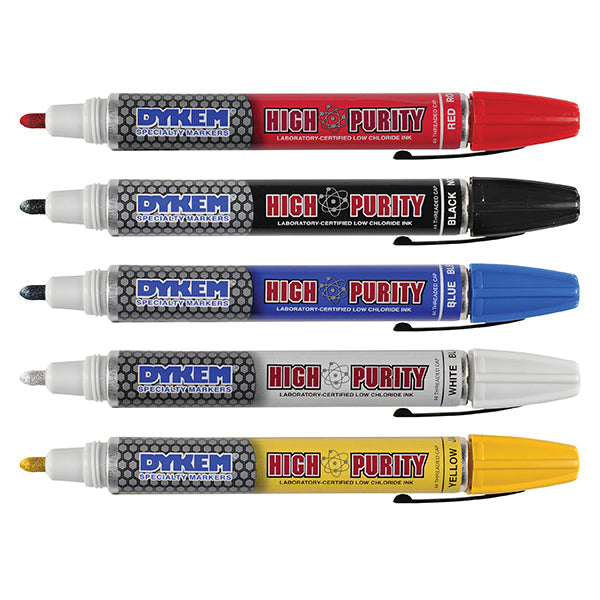
High-purity, low-chloride permanent markers are designed for applications where minimizing the risk of corrosion and contamination is essential. Selecting the correct marker can help protect sensitive metal surfaces, including certain aerospace alloys and stainless steel, while providing the durable, legible markings required in demanding industrial environments.
At MarkingPenDepot.com, we offer one of the industry's largest selections of low-chloride aerospace markers, featuring products from leading brands including Sharpie and Markal.
Why Low-Chloride Markers Matter in Aerospace Manufacturing
Aerospace components are manufactured from carefully selected materials engineered to withstand demanding mechanical, thermal, and environmental conditions. These materials may include aluminum alloys, titanium alloys, nickel-based superalloys, and various grades of stainless steel.
During manufacturing and maintenance, permanent markers are frequently used to identify parts, record inspection results, indicate assembly locations, and communicate information between production stages.
The concern is that conventional markers may contain ingredients or leave residues that are unsuitable for certain aerospace applications. Depending on the material, its surface condition, the manufacturing process, and subsequent exposure conditions, chloride contamination can contribute to corrosion.
For this reason, aerospace manufacturers and maintenance facilities may specify markers with controlled chloride content or other purity requirements.
Choosing a marker that meets the applicable requirements helps reduce the risk of introducing unwanted contaminants during routine marking operations.
The Risk of Chloride-Induced Corrosion
Chlorides are particularly important when working with susceptible metal alloys.
Stainless Steel
Stainless steel resists corrosion because its chromium-rich surface forms a protective passive layer. However, this protection is not absolute.
Under certain conditions, chloride ions can interfere with the passive layer and contribute to localized corrosion, including pitting and crevice corrosion. The risk depends on factors such as the stainless steel grade, chloride concentration, moisture, temperature, surface condition, and exposure duration.
In aerospace manufacturing, where stainless steel may be used in fasteners, fittings, structural components, and other critical applications, controlling potential sources of contamination is an important consideration.
Aluminum Alloys
Many aerospace aluminum alloys are susceptible to localized corrosion, particularly when exposed to aggressive environments or when their protective surface condition is compromised.
Chloride exposure can contribute to pitting and other corrosion mechanisms. For components with demanding service requirements, minimizing avoidable contamination during fabrication, inspection, and assembly is a sensible precaution.
Titanium and Nickel-Based Alloys
Titanium alloys and nickel-based superalloys are valued for their performance in demanding aerospace environments. Their corrosion behavior differs from that of aluminum and stainless steel, and the presence of chloride does not automatically cause corrosion in every application.
Nevertheless, aerospace specifications may impose strict limits on contaminants and marking materials because of the critical nature of the components and the specific manufacturing or service environment.
The important point: A standard permanent marker should not automatically be assumed acceptable for every aerospace metal. Always verify the marker's documented chemical composition and suitability for the material and process involved.
What Makes a Permanent Marker Suitable for Aerospace Use?
When selecting a low-chloride aerospace marker, consider more than the word "permanent" on the label.
Important selection criteria include:
-
Controlled chloride content: Look for products with documented chloride limits that satisfy the applicable drawing, process specification, or customer requirement.
-
High-purity formulation: Confirm that the marker is appropriate for the material and contamination-control requirements of the application.
-
Durable, legible markings: Select an ink that provides sufficient visibility and adhesion for the intended marking surface and manufacturing stage.
-
Application compatibility: Verify suitability for the specific alloy, surface finish, cleaning procedure, and operating environment.
-
Documented compliance: Obtain technical data, certificates, or other manufacturer documentation when required by your quality system.
It is also important to understand that low-chloride and high-purity are not interchangeable terms. A marker advertised as low-chloride may still contain other ingredients that are restricted by a particular aerospace specification. The complete formulation and applicable documentation should guide the selection.
Permanent Markers for Aerospace Identification and Traceability
Low-chloride permanent markers can be useful in a variety of aerospace-related operations, subject to the requirements of the specific application.
Common uses include:
-
Part identification during manufacturing and assembly.
-
Inspection and quality-control markings.
-
Temporary process identification that must remain legible through defined production stages.
-
Marking metal components during fabrication and maintenance.
-
Recording component numbers, inspection references, or other approved identification information.
-
Communicating assembly instructions and inspection status on suitable surfaces.
The appropriate ink, tip size, color, and marking method will depend on the component and the manufacturing process. Some applications may also require the marking to be removable before heat treatment, coating, welding, cleaning, or another downstream operation.
Before marking flight-critical hardware, confirm that the proposed marker and marking procedure are approved for the intended use.
The Industries Largest Selection of Low Chloride
MarkingPenDepot.com provides a broad selection of low-chloride permanent markers for aerospace and other contamination-sensitive industrial applications.
Our offering includes products from Sharpie, Dykem, Arro, Sakura and Markal, giving customers access to established marking brands and options for different identification requirements.
Whether your operation requires fine-line identification, visible inspection markings, or permanent writing on compatible metal surfaces, selecting the correct product starts with understanding the material, the required marking performance, and the applicable purity limits.
Not every marker from these brands is necessarily suitable for aerospace use. Customers should select specific products identified by the manufacturer as meeting the required chloride or purity specifications and verify the relevant technical documentation before use.
How to Choose the Right Low-Chloride Marker
Before purchasing markers for aerospace production or maintenance, consider the following questions:
-
What material are you marking? Identify the exact alloy and, where relevant, the surface treatment or finish.
-
What chloride limit applies? Check the engineering drawing, manufacturing specification, or customer quality requirements.
-
Must the marking remain permanent? Determine whether the mark must survive handling, cleaning, or subsequent manufacturing steps.
-
What documentation is required? Confirm whether your organization needs a technical data sheet, certificate of conformity, or specific chemical analysis.
-
Will the marking interfere with later processing? Verify compatibility with cleaning, coating, welding, heat treatment, and other downstream operations.
These steps help ensure that a convenient shop-floor marking tool does not introduce an avoidable materials-compatibility or quality-control problem.
Shop Low-Chloride Aerospace Markers at MarkingPenDepot.com
When marking aerospace components, the right permanent marker is more than a convenience. It is part of a disciplined approach to material compatibility, contamination control, and manufacturing quality.
MarkingPenDepot.com offers one of the industry's largest selections of low-chloride aerospace markers, including products from Sharpie and Markal. Our goal is to make it easier for aerospace manufacturers, maintenance facilities, and industrial buyers to find marking products suited to their specific requirements.
Shop MarkingPenDepot.com for low-chloride permanent markers designed for aerospace and other demanding industrial applications. Choose the product that matches your alloy, marking requirements, and applicable purity specification to support clear identification while helping control the risk of unwanted contamination.