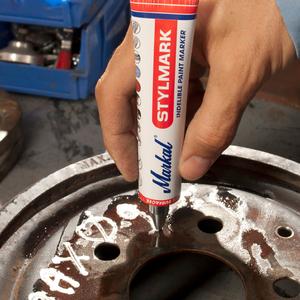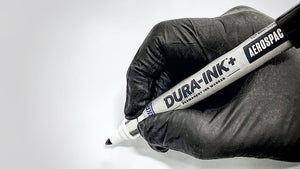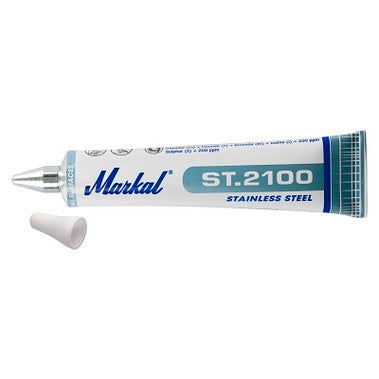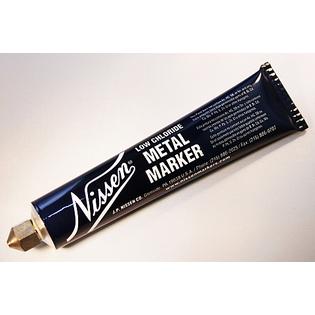
Standard solvent-based paint markers can create serious corrosion risks on stainless steel because many contain contaminants — especially chlorides, sulfur compounds, halogens, and low-melting metals — that can attack the passive oxide layer that gives stainless steel its corrosion resistance.
Why ordinary paint markers are a problem on stainless steel
Stainless steel protects itself with a very thin chromium oxide “passive” layer. If that layer is contaminated or damaged, localized corrosion can begin.
The biggest concern is chloride contamination.
Chlorides cause localized corrosion
Many common industrial paint markers contain:
- Chlorinated solvents
- Chloride-containing pigments
- Halogenated resins
- Impurities in dyes or fillers
When these chlorides sit on stainless steel — especially in:
- humid environments,
- elevated temperatures,
- marine/coastal exposure,
- chemical processing,
- nuclear or pharmaceutical service,
they can initiate:
- pitting corrosion
- crevice corrosion
- stress corrosion cracking (SCC)
These attacks are dangerous because stainless steel can appear fine externally while microscopic cracking progresses underneath.
Why stainless steel is especially sensitive
Austenitic stainless grades like:
- 304
- 304L
- 316
- 316L
are highly vulnerable to chloride-induced stress corrosion cracking, particularly above about 140°F (60°C).
Even trace contamination from marking products can become embedded during:
- welding,
- fabrication,
- heat treatment,
- passivation,
- long-term service.
That is why industries with strict material integrity standards tightly control all marking materials.
Industries that prohibit standard markers
Many specifications prohibit ordinary markers on stainless steel used in:
- nuclear power
- aerospace
- semiconductor manufacturing
- pharmaceutical processing
- food processing
- LNG and petrochemical systems
- ultra-high purity piping
Relevant standards often include:
- ASTM
- ASME
- AWS
- nuclear QA programs
- military specifications
Why low-chloride markers are recommended
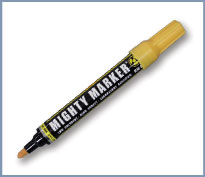
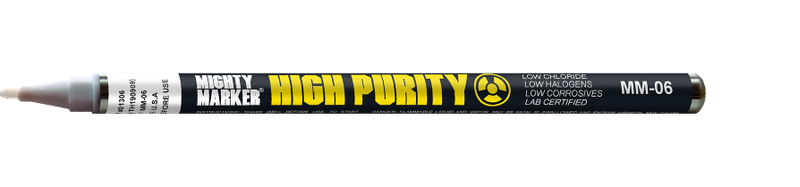
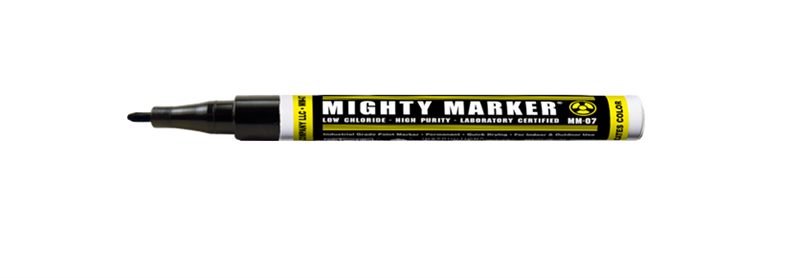
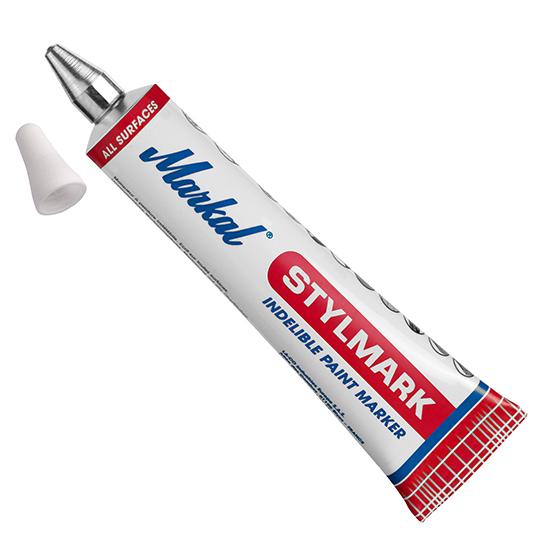
Products like Dykem High Purity markers and Markal Certified markers are specifically formulated to minimize harmful contaminants.
These markers are tested for:
- low chloride content
- low sulfur content
- low halogen content
- low-melting metal contamination
Typical certifications reference:
- nuclear-grade requirements
- stainless steel compatibility
- ASTM or ASME contamination limits
What “high purity” actually means
High-purity markers are designed so the total leachable contaminants remain below strict thresholds, commonly measured in:
- ppm (parts per million)
The goal is to prevent anything that could compromise:
- corrosion resistance,
- weld integrity,
- passivation,
- or long-term material reliability.
Additional reasons certified markers are preferred
Besides low chloride content, they also usually provide:
- better adhesion to smooth stainless surfaces
- faster dry times
- resistance to heat and solvents
- traceable lot control
- certification documentation for QA audits
That documentation is critical in regulated industries.
Important distinction
Not all “industrial” paint markers are safe for stainless steel.
A marker can:
- write well on metal,
- be oil-resistant,
- or even be marketed for fabrication,
while still containing chloride levels that make it unsuitable for critical stainless applications.
That is why terms like:
- “low chloride”
- “nuclear grade”
- “high purity”
- “certified for stainless steel”
matter more than simply “industrial marker.”
Practical rule used in fabrication shops
For carbon steel:
- almost any paint marker is acceptable.
For stainless steel, especially 300-series:
- use only certified low-halogen / low-chloride markers,
- particularly before welding, passivation, or high-temperature service.
Using the wrong marker can lead to:
- rejected welds,
- failed inspections,
- contamination findings,